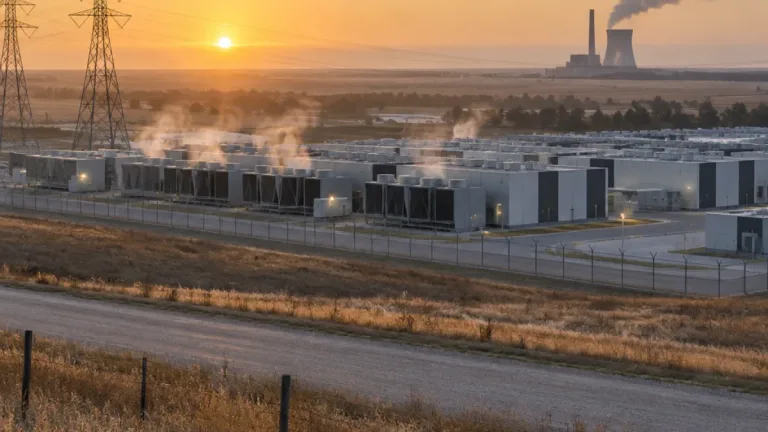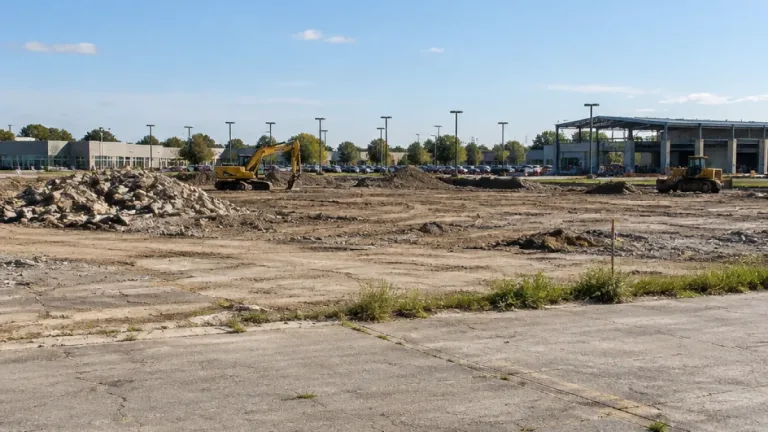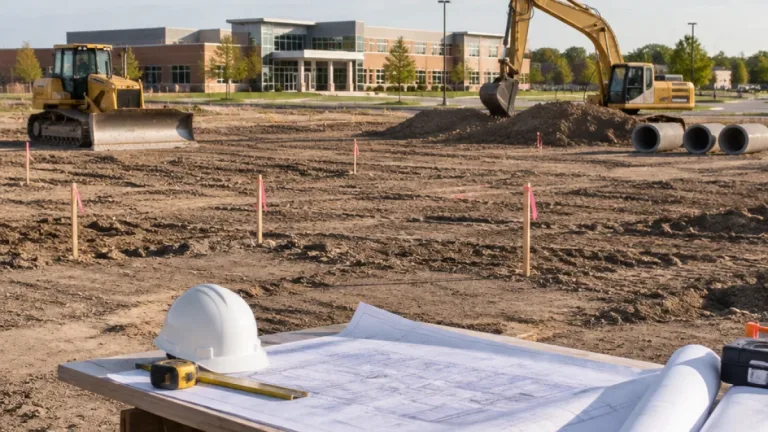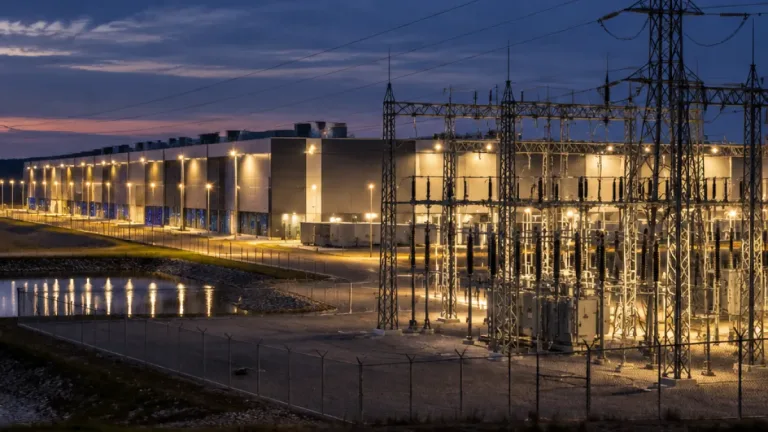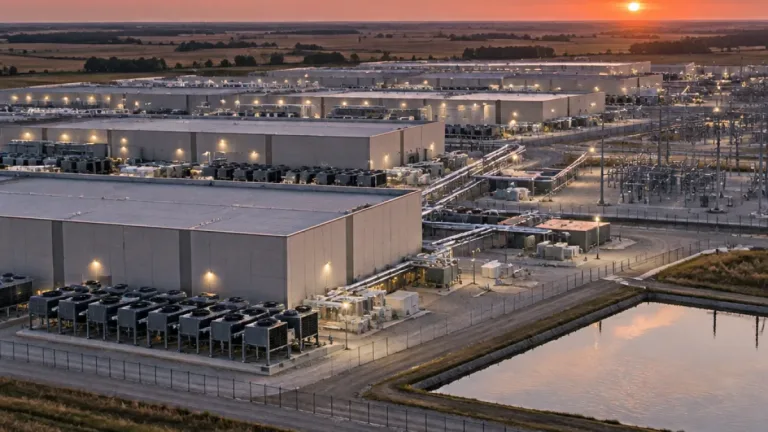
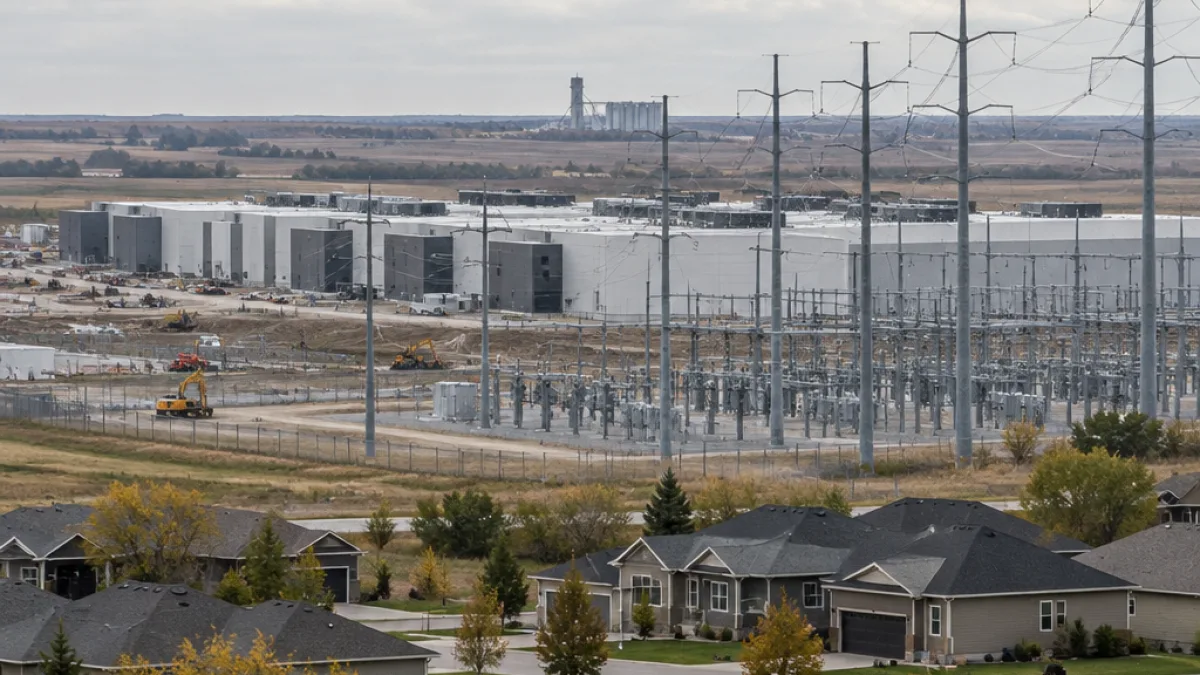
A Federal Reserve Bank of Kansas City analysis says data centers can produce measurable economic gains for communities in Nebraska and the rest of the Tenth Federal Reserve District, while also creating costs that may complicate future development.
The facilities have been built in the United States for more than 25 years, but construction has accelerated as demand for artificial intelligence services has increased. The analysis examined research on the effects of completed and planned data centers, including their influence on employment, wages, income, home values and electricity prices.
Construction and operations bring different effects
Research cited by the Kansas City Fed found that data centers can raise local electricity prices while also increasing job growth, income, wages and home values. The strongest gains have been documented in metropolitan areas and in places where a large technology company is the first data-center developer.
The benefits have been concentrated in industries involved in building and operating the facilities. Construction activity can increase building permits and wages, while the beginning of operations can add jobs and employment in the surrounding economy. The employment increase tied to a facility beginning operations is significant, the analysis said, but smaller than the increase associated with a large manufacturing plant opening.
- Data centers can increase local employment, wages, income and home values.
- Electricity prices may rise in communities where the facilities are built.
- Economic gains are generally stronger in metropolitan areas than in rural areas.
The analysis also described potential effects when multiple facilities are developed in the same area. A cluster can allow developers to share infrastructure and benefit from scale. For local economies, the study cited increases in building permits, total wages and total employment as data-center activity expands.
Most district activity is in metropolitan areas
Active data centers and facilities under construction are concentrated in metropolitan areas across most of the Tenth District. Announced projects also are more likely to be located in cities than in rural communities, although the analysis said rural projects are likely to increase.
Oklahoma was identified as an exception within the district because most of its data-center activity is in rural areas. The analysis said the concentration of projects in metropolitan areas allows those states to capture more of the economic benefits associated with construction and operations.
Over a longer period, data centers could provide significant tax revenue for city and county governments after construction activity ends. The analysis presented that revenue as a possible future benefit rather than a guaranteed result, alongside the documented effects on employment, wages, housing values and electricity costs.
The Kansas City Fed said the findings echo earlier research on digital infrastructure and large manufacturing plants, which found a combination of positive and negative effects for nearby communities. The analysis did not treat data centers as equivalent to manufacturing facilities: their operating employment gains can be smaller, while the development of multiple facilities may produce broader economic spillovers.