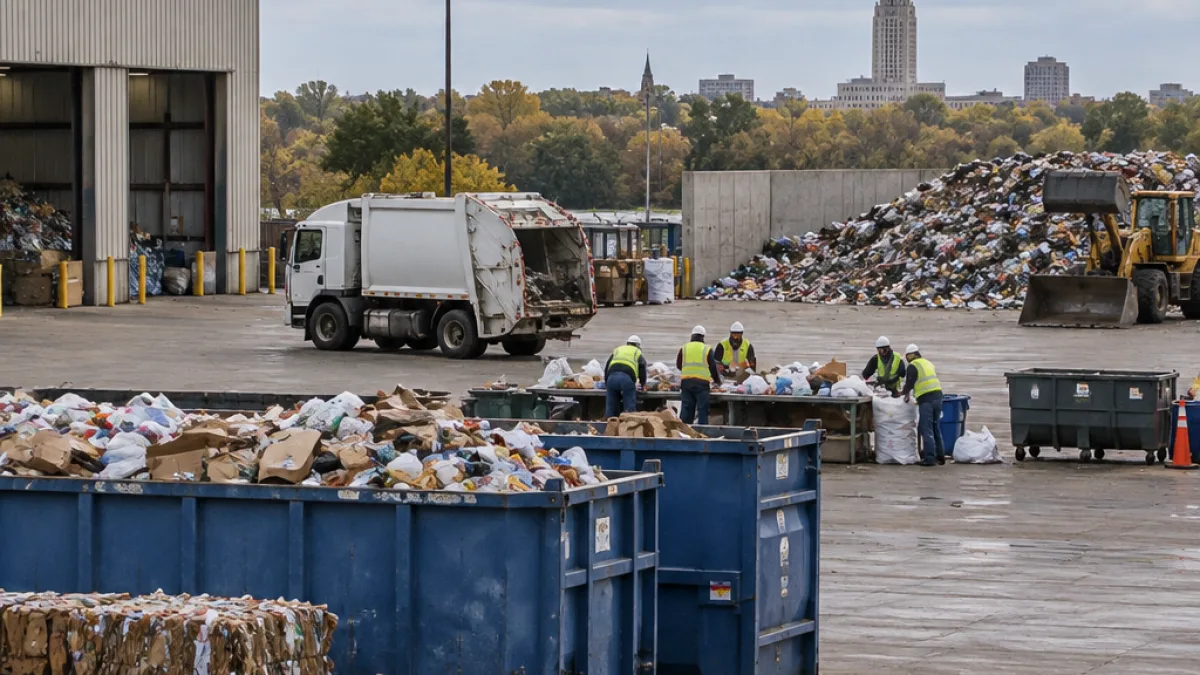
The city of Lincoln has used $776,117 from a federal grant for a public campaign intended to reduce household waste and increase recycling, according to spending records provided through a public-records request.
The U.S. Environmental Protection Agency awarded Lincoln a $1,727,800 Consumer Recycling Education and Outreach Grant. The program is designed to support education efforts in residential areas, with the goal of reducing the amount of material sent to landfills and improving recycling practices.
Spending through Nov. 10
Lincoln Transportation and Utilities’ Solid Waste Management division reported spending in four main areas by Nov. 10:
- $343,334 for creative material, branding and advertising;
- $216,886 for marketing research and studies of resident behavior;
- $124,861 for waste audits and outreach to commercial operations; and
- $91,036 for multicultural outreach and translation into additional languages.
The combined spending in those categories represents about 45% of the federal award. The campaign is called “Love Your Land Phil,” and its mascot, Land Phil, represents the city’s Bluff Road Solid Waste Landfill.
Willa DiCostanzo, facility operations coordinator for Solid Waste Management, said the city worked with Lincoln marketing agency Eleanor Creative to develop the mascot and communicate directly with residents. The campaign began in June 2026.
“Phil has been designed to provide an opportunity for engagement and education,” DiCostanzo said.
DiCostanzo said about 40 people and organizations had requested opportunities to interact with the campaign by Nov. 10. Those opportunities included booths and meet-and-greet events featuring Land Phil. She said the city uses those contacts to discuss waste and recycling practices and offer information residents can use at home.
Additional state and city spending
The federal grant is providing nearly all of the campaign’s funding. The Nebraska Department of Environment and Energy separately spent about $6,800 to print food-reduction guides, meal-preparation handouts and meal-planning notepads.
Solid Waste Management also covered $3,500 in additional costs, according to the information provided. The division applied for a grant from the state environment agency to support more public education.
The EPA grant focuses on household waste and residential recycling, while the city’s reported spending also includes commercial waste audits and outreach. The campaign’s research component is intended to examine residents’ behavior as the city develops its educational materials and public engagement efforts.