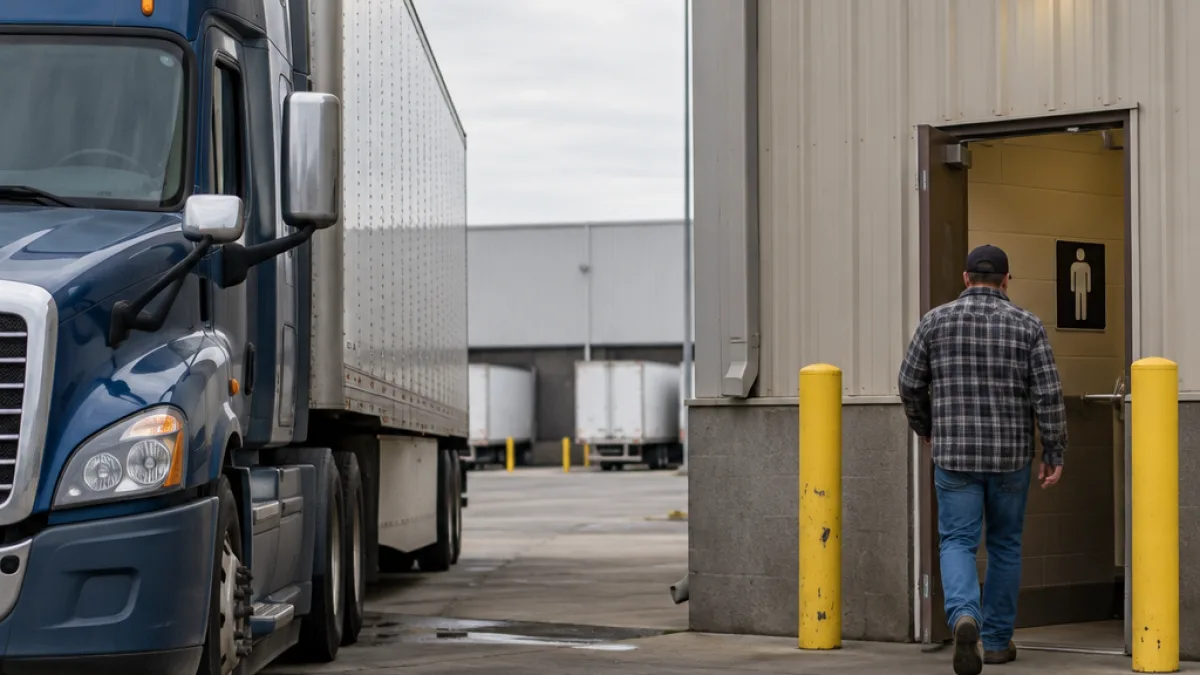
Sen. Deb Fischer, R-Neb., has joined a bipartisan effort to require businesses receiving or shipping freight to provide commercial truck drivers access to their restroom facilities.
Fischer and Sen. Lisa Blunt Rochester, D-Del., introduced the Trucker Bathroom Access Bill on Nov. 12. A companion measure was also introduced in the U.S. House. The legislation would apply to shippers, receivers, manufacturers, warehouses, distribution centers and other businesses where commercial motor vehicles pick up or deliver goods.
Under the proposal, truck drivers would receive the same restroom access offered to a business’s customers or employees. The bill would not require businesses to construct new restrooms or add facilities specifically for drivers.
“This is another way we can help our truckers who put in long hours to keep products moving,” Fischer said. “I thank Senator Blunt Rochester for leading this bill, and I will keep working to take care of truckers across the country.”
Blunt Rochester said the measure also addresses the growing participation of women in the trucking industry. She said drivers should be able to have their basic needs met while performing work that keeps freight moving through the country.
What the bill would require
- Businesses receiving or sending goods by commercial motor vehicle would provide drivers access to restrooms available to customers or employees.
- The requirement would cover shippers, receivers, manufacturers, warehouses and distribution centers.
- Businesses would not have to build new restroom facilities under the proposal.
Several trucking organizations have endorsed the legislation, including the Owner-Operator Independent Drivers Association, the American Trucking Association, the Women in Trucking Association, She Trucking and Trinity Logistics.
Todd Spencer, president of the Owner-Operator Independent Drivers Association, said more than 70% of the nation’s freight is carried exclusively by trucks. He said drivers are sometimes denied restroom access while picking up or delivering freight and credited Fischer and Blunt Rochester with advancing the proposal.
The measure remains legislation introduced in Congress.