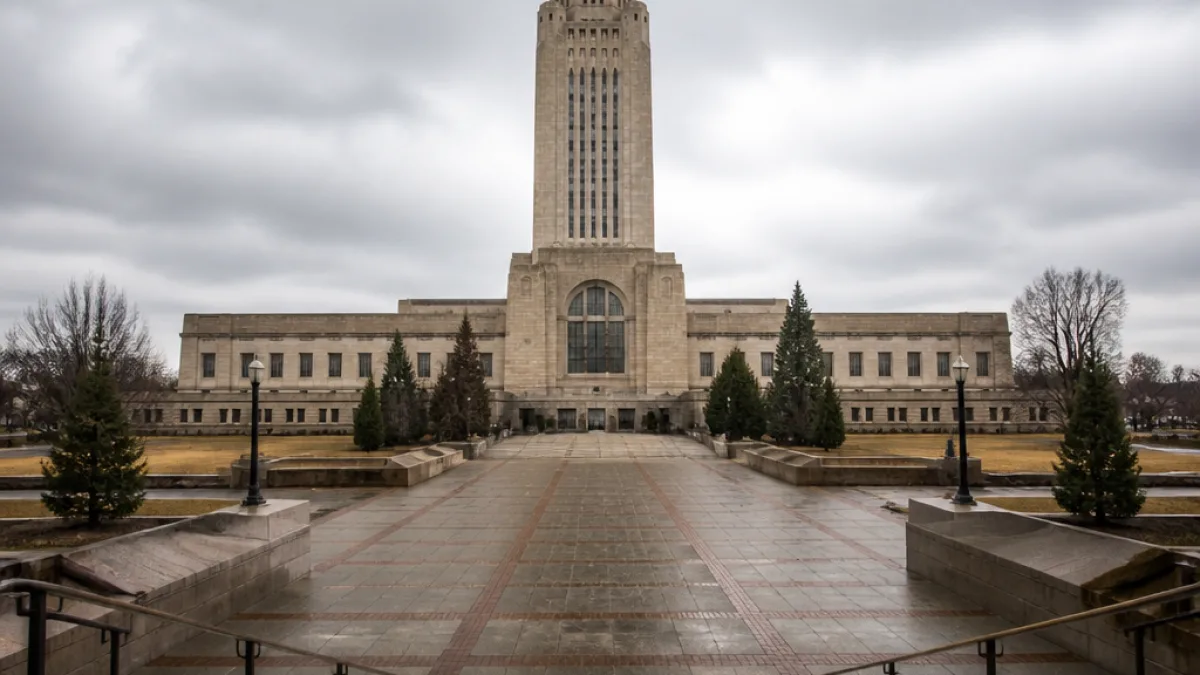
More than 10% of Nebraska’s registered voters signed petitions this year supporting a proposed constitutional amendment that would make it harder for the Legislature to alter laws enacted by voters. Because of the state Constitution’s single-subject rule, that amendment will not appear on the Nov. 3 ballot.
What the rule does
The single-subject rule, added to the Nebraska Constitution in 1998, requires initiative petitions to address only one subject. Courts have applied the provision to determine whether a proposed statute or constitutional amendment combines separate topics in a way that would mislead or confuse voters.
In recent years, the rule has repeatedly shaped which citizen-initiated measures reach voters. The Nebraska Supreme Court has considered single-subject challenges to initiatives six times over the past decade, and two measures were kept off the ballot after the court found they violated the rule.
Recent effects
This year’s proposal, backed by supporters of the Respect Nebraska Voters campaign, failed the single-subject test because of a single sentence in the state Constitution, the ruling said. The decision follows a pattern: in 2020 the first attempt to legalize medical marijuana was disqualified after the court found it contained more than one subject.
- Voters have used initiatives in the past decade to expand Medicaid, increase the minimum wage, require paid sick leave, legalize medical marijuana and casino gaming, amend the constitution to impose a 12-week abortion ban, enact a voter ID requirement and cap payday lender interest rates.
- Initiative sponsors and their attorneys say the practical effect of the court’s approach to the single-subject rule is confusion about how broadly or narrowly ballot language may be written.
“It’s a difficult place for the court to be in, and it doesn’t do the judiciary many favors to have these kinds of high-profile cases before it with a messy doctrine,” said Anthony Schutz, a law professor at the University of Nebraska College of Law who studies the state constitution.
Schutz said the rule’s application can make outcomes appear subjective even when justices are attempting to follow precedent. Legal experts who work on initiatives have described compressed timelines for litigation as another complicating factor: single-subject disputes are often resolved close to the deadline for finalizing the statewide ballot.
Background and legal timeline
Challenges under the single-subject rule often move quickly because Nebraska’s election calendar requires final ballots months before Election Day. When the Supreme Court receives a single-subject challenge, it must resolve whether the initiative’s text contains multiple subjects that would render the petition defective.
The recent round of litigation and disqualifications has raised questions among initiative backers about drafting strategy and about whether the court’s interpretations should be revisited by the Legislature or through further litigation. The decision blocking the current amendment means voters will not decide this proposal in the upcoming general election.
Absent from the court rulings and public filings are any changes to the constitutional text itself; the single-subject provision remains part of the Nebraska Constitution, and its enforcement continues to shape which measures are placed before voters.