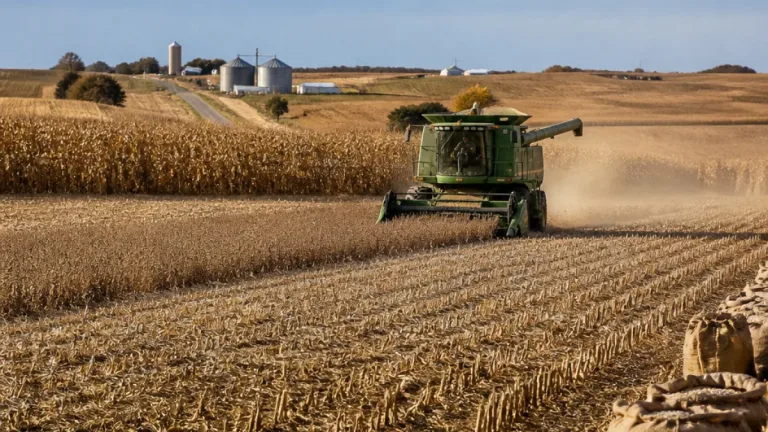
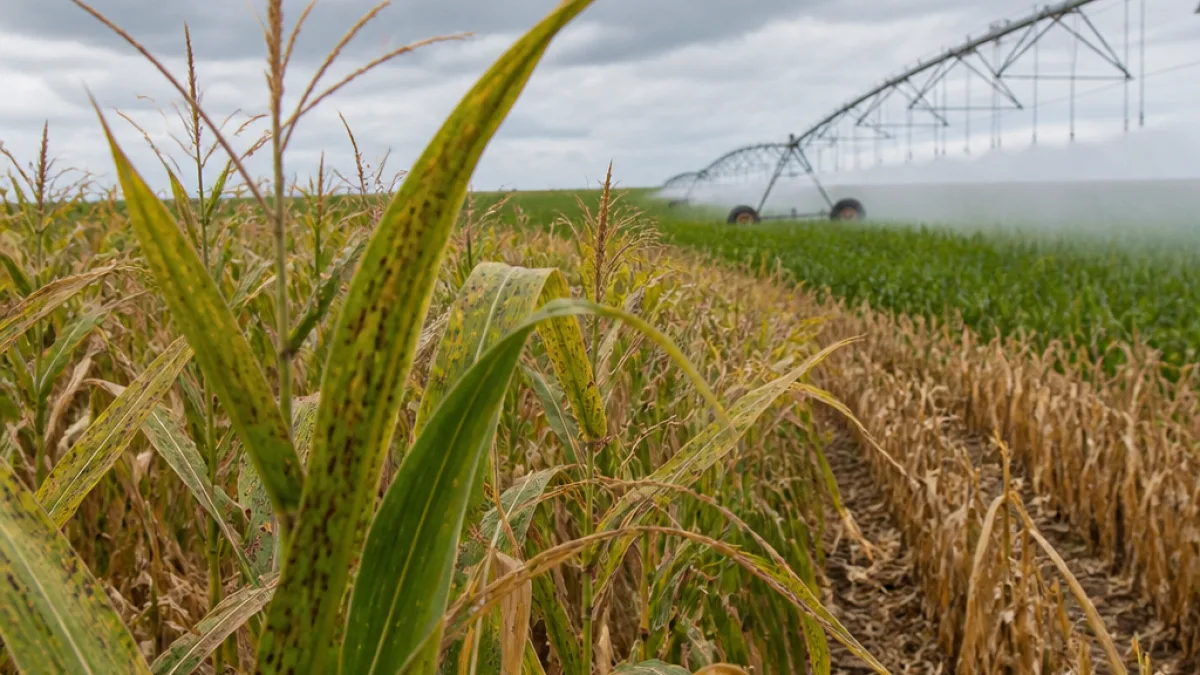
An east-central Nebraska farmer said disease pressure in his corn crop has been moderately low this year, though pockets of trouble are appearing as fields near maturity.
Tar spot the most common disease seen
Ryan Preister, who farms in east-central Nebraska, told Brownfield that tar spot has been the most prevalent disease he has observed this season. He said the problem has been largely limited to leaves above the ear but has advanced somewhat over the past weeks.
“Tar spot has been the most prevalent that we’ve seen. It’s been low to moderate pressure levels. It’s staying down below the ear leaf. It has advanced a little bit over the last couple of weeks,” said Ryan Preister.
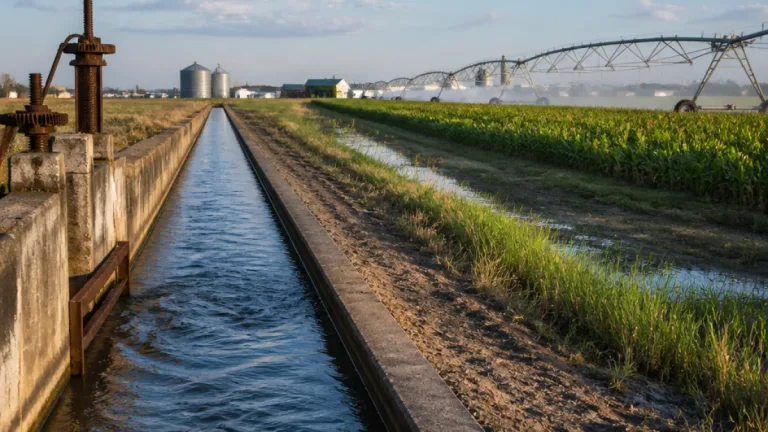
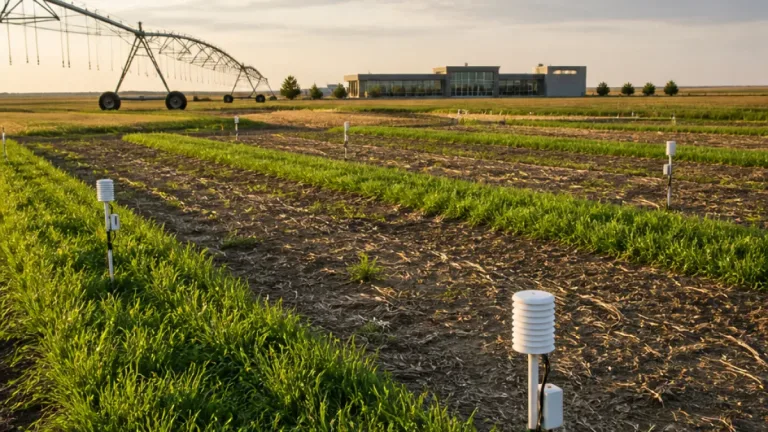
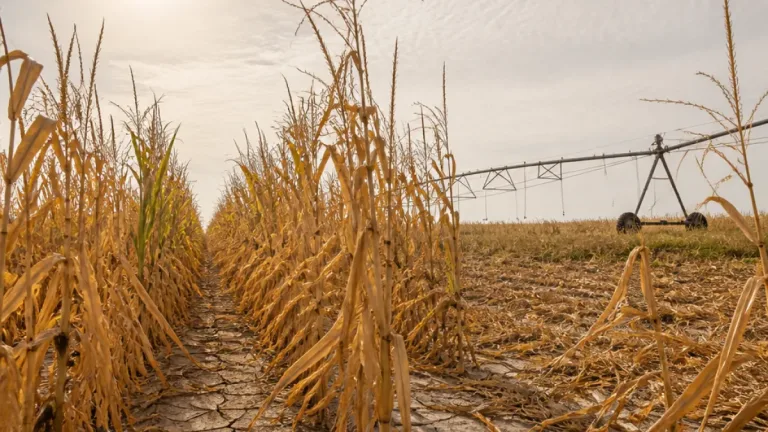
Preister told Brownfield his irrigated corn is in excellent shape, while his dryland acreage has struggled where rainfall was spotty. He said growers are beginning to apply fungicides and are preparing the crop for the final stages before harvest.
USDA condition ratings
The U.S. Department of Agriculture’s weekly crop progress snapshot cited in the source places 54% of Nebraska corn in good-to-excellent condition and 57% of soybeans in good-to-excellent condition. By contrast, pasture and range conditions were reported at 71% poor-to-very poor.
- Corn condition: 54% good to excellent
- Soybean condition: 57% good to excellent
- Pasture and range: 71% poor to very poor
Those figures echo regional variability producers have reported this season, where irrigation access and localized rainfall have created wide differences in crop health across fields.
Preister’s comments underscore two trends producers monitor late in the season: the spread and severity of foliar diseases such as tar spot, and the distinction between irrigated and dryland performance where moisture availability matters for grain fill.
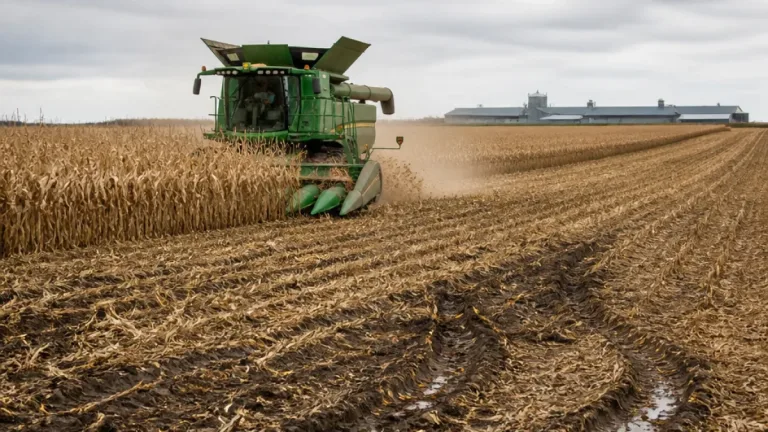
As harvest approaches, many Nebraska growers will weigh fungicide applications and other late-season management decisions against expected returns, crop condition and weather forecasts.