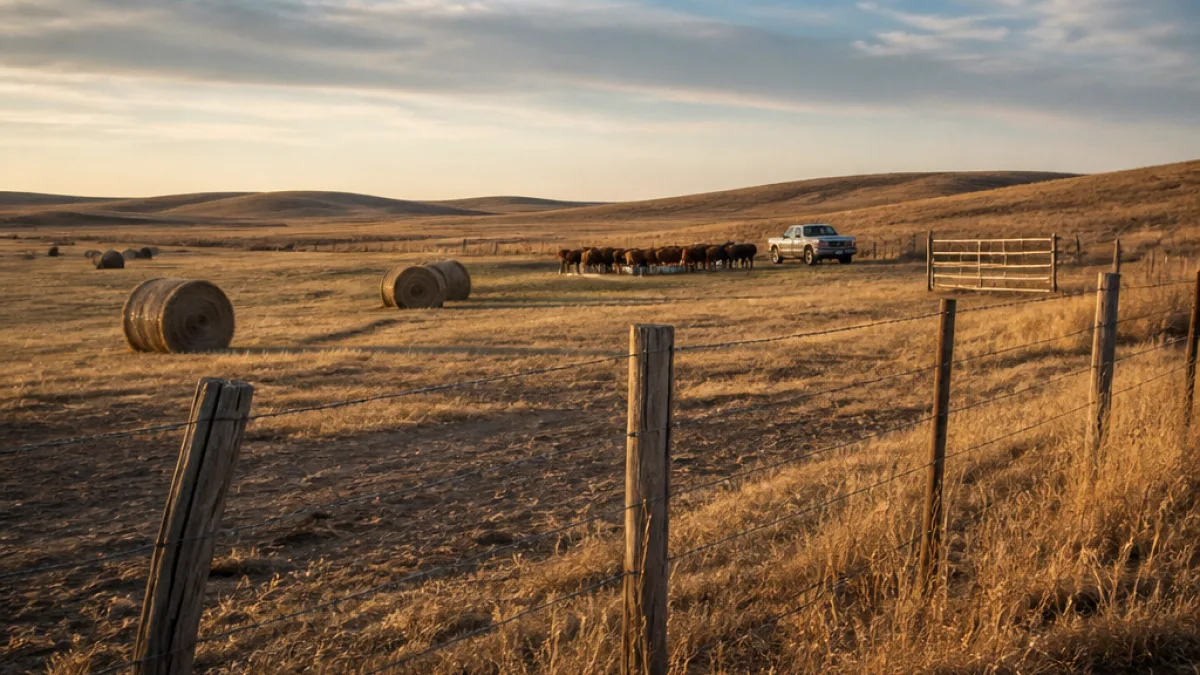
Persistent drought across the Central Plains has pushed some Nebraska livestock producers to cull herds more deeply than usual and left pasture and range conditions “abysmal,” a University of Nebraska rangeland forage specialist said Oct. 15.
Producers trimming herds, shifting grazing strategies
Mitch Stephenson, a rangeland forage specialist with the University of Nebraska, said limited feed supplies are prompting some ranchers to find other pasture, begin feeding earlier in the season or reduce herd size.
“I do think that people are culling a little bit heavier than they have. They’re either finding other pasture, and in some cases, they’re just feeding animals. In extreme cases, they didn’t even turn their cattle out.” — Mitch Stephenson, University of Nebraska rangeland forage specialist
Stephenson said April, May and June were markedly dry across many areas of western Nebraska. Those months, in some locations, were among the driest on record and contributed to reduced grass growth going into summer.
Grass production down sharply, but recent moisture shows signs of recovery
- Data collected in mid-June showed peak standing crop for cool-season grasses at about 22% of the 20-plus-year average in parts of the Sandhills, Stephenson said.
- More recent measurements recorded a 27% increase in growth compared with that mid-June low, reflecting moisture over the prior weeks.
Stephenson described the situation as a multiyear problem of low forage availability in some areas rather than a single-season downturn. That longer-term perspective helps explain why some producers are making management decisions now — including culling breeding stock or holding back on turnout — that will affect operations into next year.
Local decisions shaped by limited feed and pasture
Several producers told Brownfield Ag News they faced unusually low forage and were adjusting. Stephenson emphasized the variability across the region: some ranches have found alternative pasture or begun supplemental feeding, while other operations took more extreme measures.
The specialist noted that recent rains have improved conditions in places, but he cautioned that recovery varies by location and that the earlier losses in standing crop reflect the severity of the spring dry period.
No statewide culling totals or a unified estimate of economic losses were provided; Stephenson described observations from field data and conversations with producers across the region.
Ranchers and resource managers facing diminished pasture and hay supplies typically consider several options: moving cattle to other pastures, purchasing hay or other feed, reducing herd size, or altering stocking rates. Stephenson’s comments underline that many in the Central Plains are already employing those tactics in response to drought-driven forage shortages.