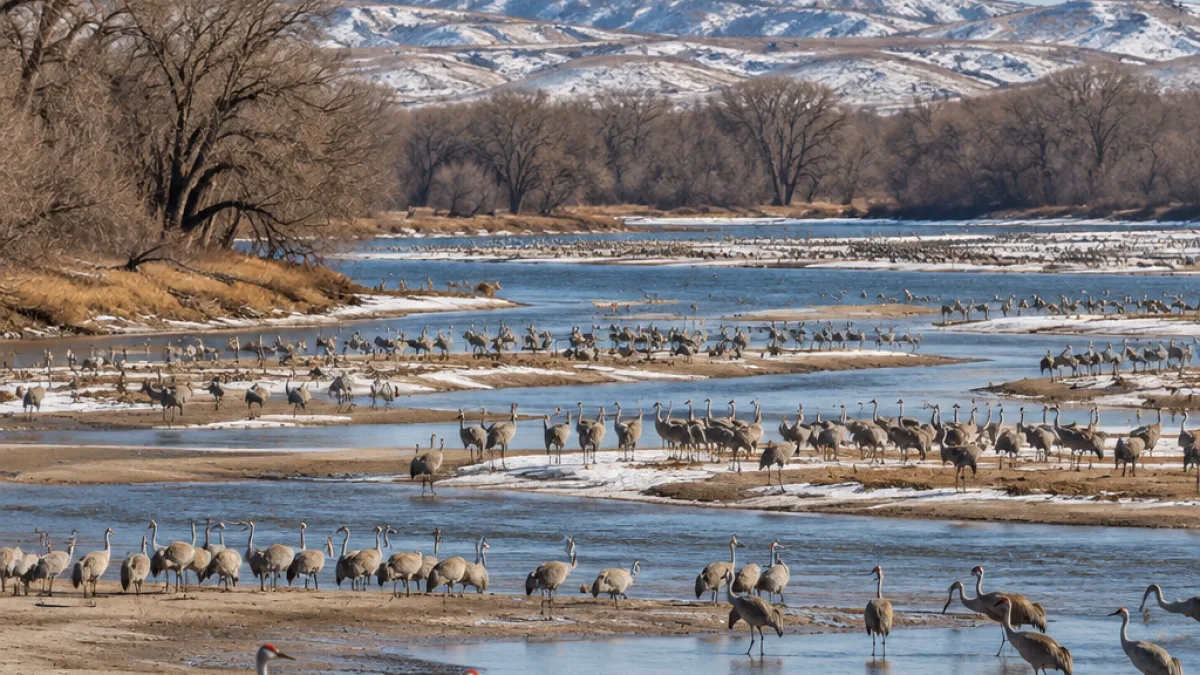
The Crane Trust is expanding its monitoring of sandhill cranes after a record 42,000 birds remained in Nebraska through last winter instead of continuing south. The Wood River-based conservation organization is examining how the birds use the central Platte River corridor during a period of warmer winters and reduced snow cover.
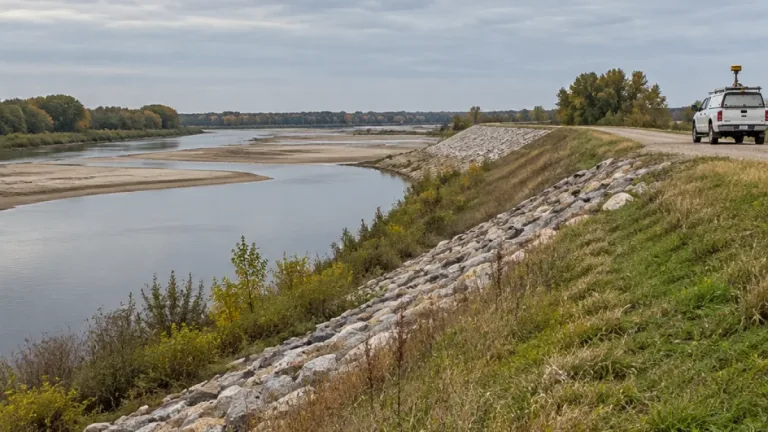
The trust manages about 10,000 acres of crane habitat along the Platte River. Its scientists have observed more cranes staying in Nebraska during the past five years. The organization’s data shows the number of cranes at its properties increased from 3,000 to 14,000 in one week this fall.
Expanded counts along the Platte
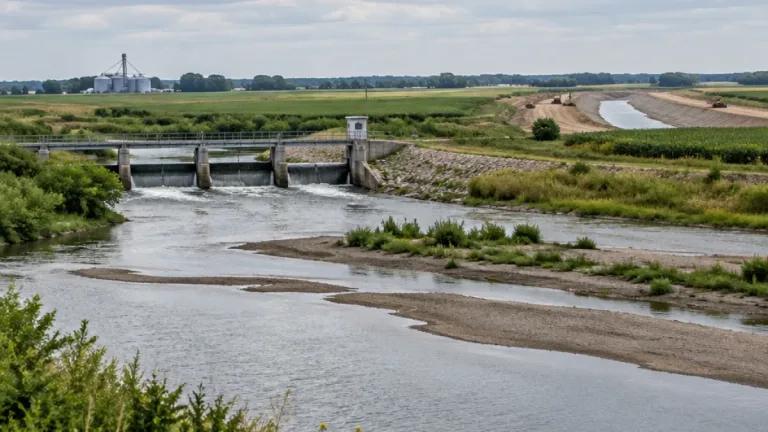
Crane Trust staff are using weekly aerial counts along about 80 miles of the river between Chapman and Overton. The organization previously had not used the method during the fall and winter, but now plans to conduct counts from mid-October through April.
The monitoring is intended to track where the cranes gather and the weather conditions present when they remain in the state. The birds have been concentrating southwest of Grand Island, according to the trust.
- A record 42,000 sandhill cranes overwintered in Nebraska last winter.
- The Crane Trust’s monitoring area extends from Chapman to Overton.
- The organization plans to continue the expanded project for many years.
Researchers examine winter conditions
Crane Trust representative Ostrom attributed the changing pattern to warmer Nebraska winters and less snowfall. Researchers say Nebraska winters are about 2 degrees warmer than in the past and have had about 10 fewer days of snow cover.
The trust is continuing to study the relationship between those seasonal conditions and the cranes’ movements. The central Platte River corridor hosts more than 1 million sandhill cranes during the fall migration, making the region an important area for tracking changes in the birds’ habitat use.
Sandhill cranes use the Platte River and surrounding areas during migration, with the river’s channels and nearby habitat providing places for the birds to gather. The expanded counts will cover the period from mid-October through April and are planned to continue for many years.