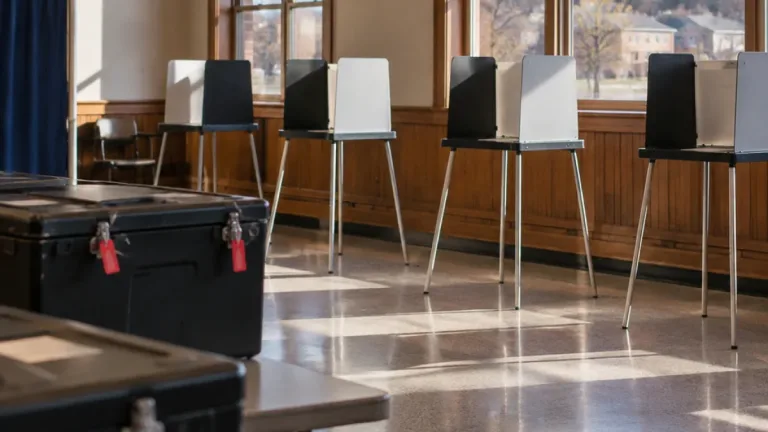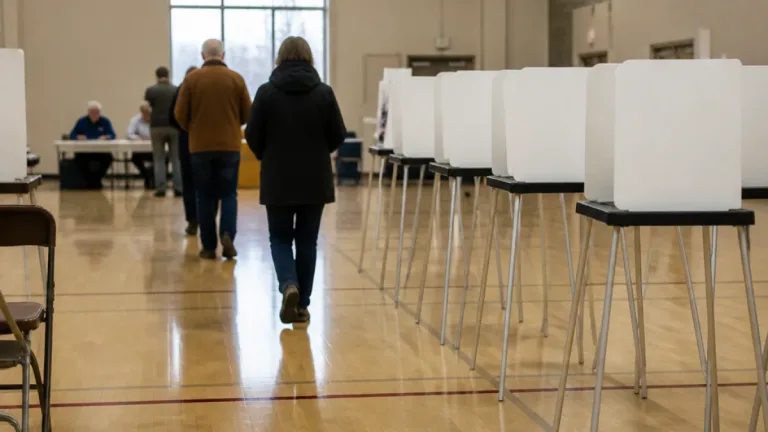
Nebraska voters will choose candidates for state offices and decide statewide ballot measures Tuesday as campaign finance filings show more than $63 million has been raised for the 2026 general election.
Data available Sunday afternoon showed candidates running for 43 state-level offices, including governor and seats on two statewide education boards, had raised $36.5 million. About 75% of that money came from Nebraska, while 11% came from Washington, D.C. Contributions were reported from every state except Alaska, Delaware and New Hampshire.
Ballot measure campaigns draw outside money
Four groups supporting or opposing three statewide ballot measures had raised nearly $26.9 million. Only 21.3% of that amount came from Nebraska. Donors in New York provided 38.6% and donors in Massachusetts provided 36.5%.
The out-of-state funding is driven largely by campaigns over Initiative Measures 440 and 441, which would legalize and regulate online sports betting. Outside gambling interests are the sole donors to the campaign supporting those measures, according to the campaign finance data.
- $36.5 million: raised by candidates for 43 state-level offices.
- $26.9 million: raised by groups supporting or opposing three statewide ballot measures.
- $3.68 million: spent by political action committees supporting or opposing the same candidates or issues.
Political action committees also spent $3.68 million to support or oppose the state-level candidates and ballot issues. That figure does not include administrative spending or money already listed in candidate-disclosed donation reports.
West Omaha legislative race tops $1.2 million
The most expensive legislative contest identified in the data is in Legislative District 4 in west Omaha. Direct spending in the race has exceeded $1.2 million, while outside political action committees have spent an additional $323,000 supporting or opposing incumbent state Sen. Brad von Gillern of Elkhorn and challenger Cindy Maxwell-Ostdiek of Omaha.
Von Gillern, a Republican, is seeking reelection in a rematch with Maxwell-Ostdiek, who is registered as nonpartisan. Maxwell-Ostdiek finished ahead of von Gillern in the spring primary by approximately the same margin by which he won the race four years ago.
“It’s the unfortunate reality that we live with right now,” von Gillern said.
The race also has implications for legislative leadership. Several senators have asked von Gillern to consider the open speakership, and the outcome will help determine which lawmakers return to the officially nonpartisan, unicameral Nebraska Legislature next year.
The legislative candidates are seeking offices whose members receive $12,000 per year. The direct spending in District 4 is therefore about 100 times the annual legislative salary, based on the figures available Sunday.