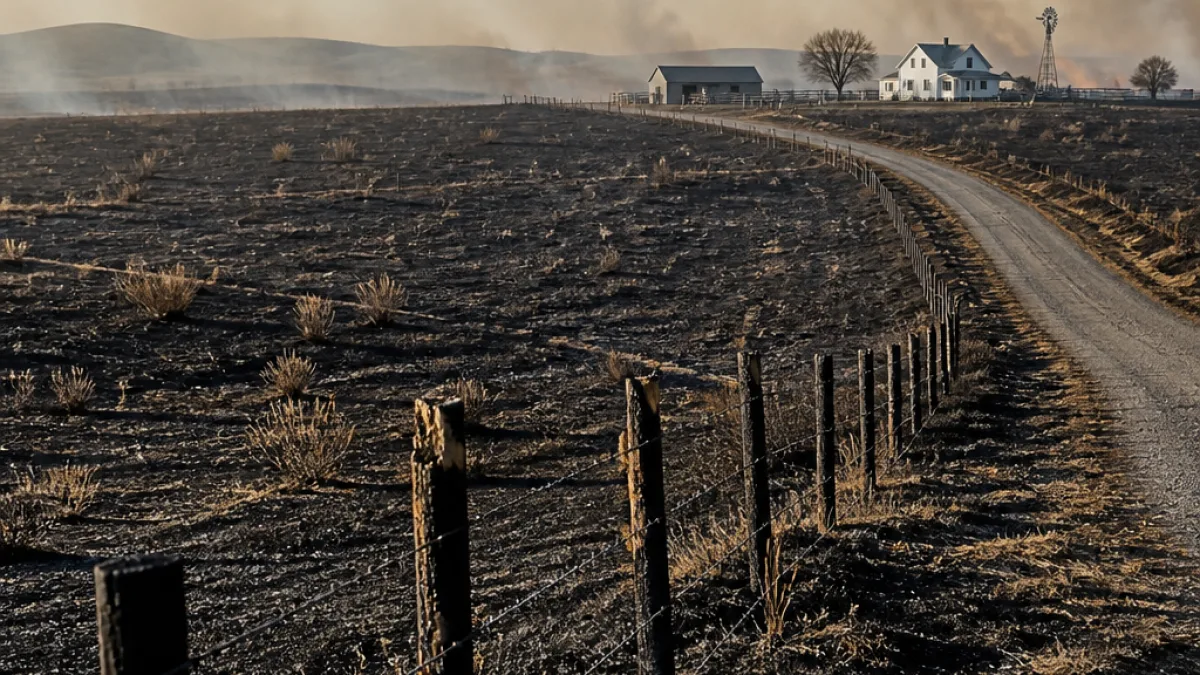
The majority of rural Nebraskans say their communities face at least a moderate risk of wildfire, according to results from the University of Nebraska–Lincoln Extension’s annual Rural Poll.
Survey finds widespread concern after spring fires
More than 70% of rural respondents described the wildfire threat in their community as moderate, high or very high. Fifteen percent rated the risk as very high, 20% said high and 37% said moderate, the poll manager, Rebecca Vogt, said. The poll began at the end of April, shortly after large blazes in March burned nearly 800,000 acres across the Sandhills and parts of western Nebraska.
“This survey was started at the end of April, so it was right after we had been experiencing a number of fires in the state,” Rebecca Vogt, survey manager for UNL Extension’s Rural Prosperity Nebraska, said.
Regional responses tracked with where large wildfires occurred this spring. Residents of the Panhandle and north central regions were far more likely to rate risk as high or very high: more than two-thirds in those areas chose those categories. By contrast, about one in 10 respondents in southeastern Nebraska rated wildfire risk as high or very high.
Officials see opportunity to boost preparedness
Ben Bohall, public information officer for the Nebraska Forest Service, said the March fires have increased public attention to wildfire prevention and response.
“Nebraska landowners and homeowners want to know — how do I stay prepared for this kind of situation, and what can I do to prevent fires in my community?” Bohall said.
Bohall also emphasized the human role in most wildfires. “Ninety percent of these fires are human-caused, and people are now aware of their role in preventing these,” he said.
Vogt told pollsters that heightened risk perception may translate into practical support for local fire protection, such as volunteering, donations or backing mitigation activities. The Rural Poll asks UNL researchers and community and state leaders what information to gather from rural residents; results are used to inform Extension outreach and local planning.
The poll’s timing — conducted immediately after a season of large fires — is notable in the survey team’s analysis. Vogt said the recent events likely influenced how respondents judged risk in their communities.
- More than 70% of rural Nebraskans see at least a moderate wildfire risk.
- 37% rated the risk moderate, 20% high and 15% very high.
- Respondents in the Panhandle and north central regions reported the highest perceived risk; southeastern Nebraska respondents reported the lowest.