Nebraska’s agricultural resources, research institutions and regional partnerships could help the state participate in an expanding industrial bioeconomy, according to a publication released Thursday by the Council on Competitiveness.
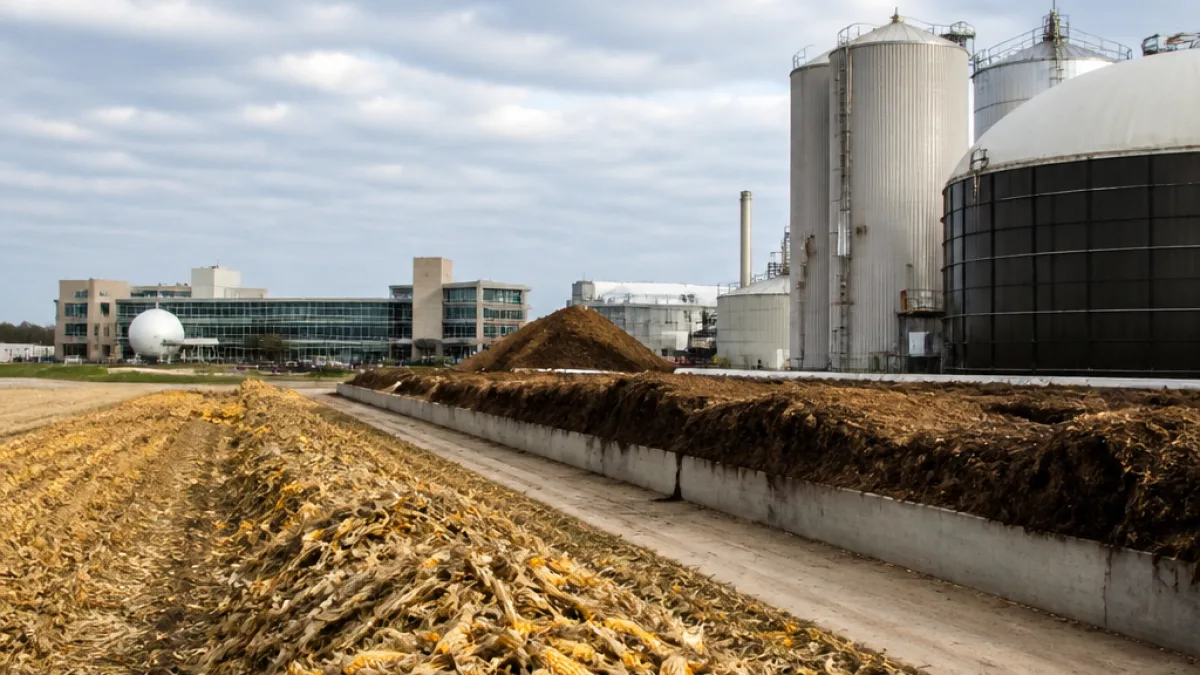
The industrial bioeconomy uses biological resources such as crops, microorganisms and organic waste to produce food, materials, energy and other products. The council said the sector generates about $4 trillion in annual activity today and is projected to grow to more than 10 times that amount by 2050.
The publication, titled Nebraska: Leading the New Frontier in the Bioeconomy, follows a two-day competitiveness meeting held April 29-30 at the Durham Museum in Omaha. The University of Nebraska System co-hosted the meeting, the 12th installment of the council’s national series focused on regional and national strategies for U.S. competitiveness.
Research and production priorities
Participants discussed the relationship between the industrial bioeconomy and national security, economic growth, workforce development, artificial intelligence and innovation. The council identified several issues that it said cut across the sector:
- Global biotechnology competition has become an industrial strategy competition.
- The United States must develop new biological products and manufacture them domestically at scale.
- Artificial intelligence, biology and advanced manufacturing are changing the pace and scale of innovation.
- Reliable demand is needed to help move industrial bioeconomy products toward larger-scale production.
- New biotechnology applications require updated governance for potential dual-use risks.
- Workforce capacity remains a constraint across the sector.
The publication points to existing regional efforts as examples of how those priorities are being pursued. One is RuralSTAMINA, an Iowa State University-led Regional Innovation Engine funded by the National Science Foundation. The initiative includes the University of Nebraska-Lincoln and other partners and received an initial $15 million award from the foundation.
The council’s Nebraska meeting was part of an effort to identify emerging practices, policies and opportunities that could strengthen U.S. competitiveness. Its discussion placed Nebraska within a broader industrial strategy that connects biological resources with energy, manufacturing, artificial intelligence and workforce development.