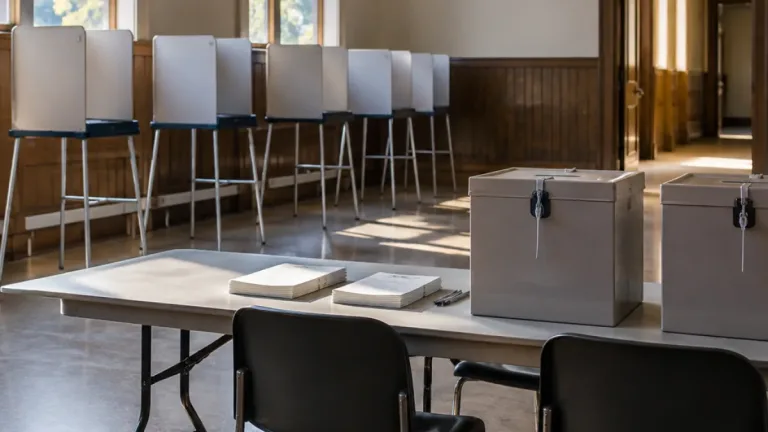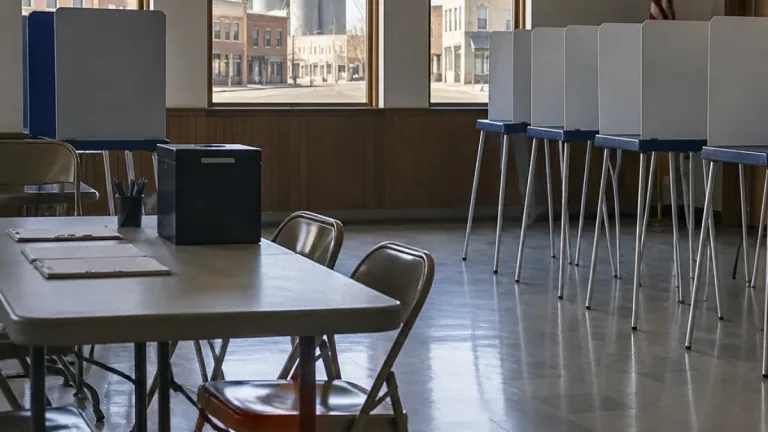
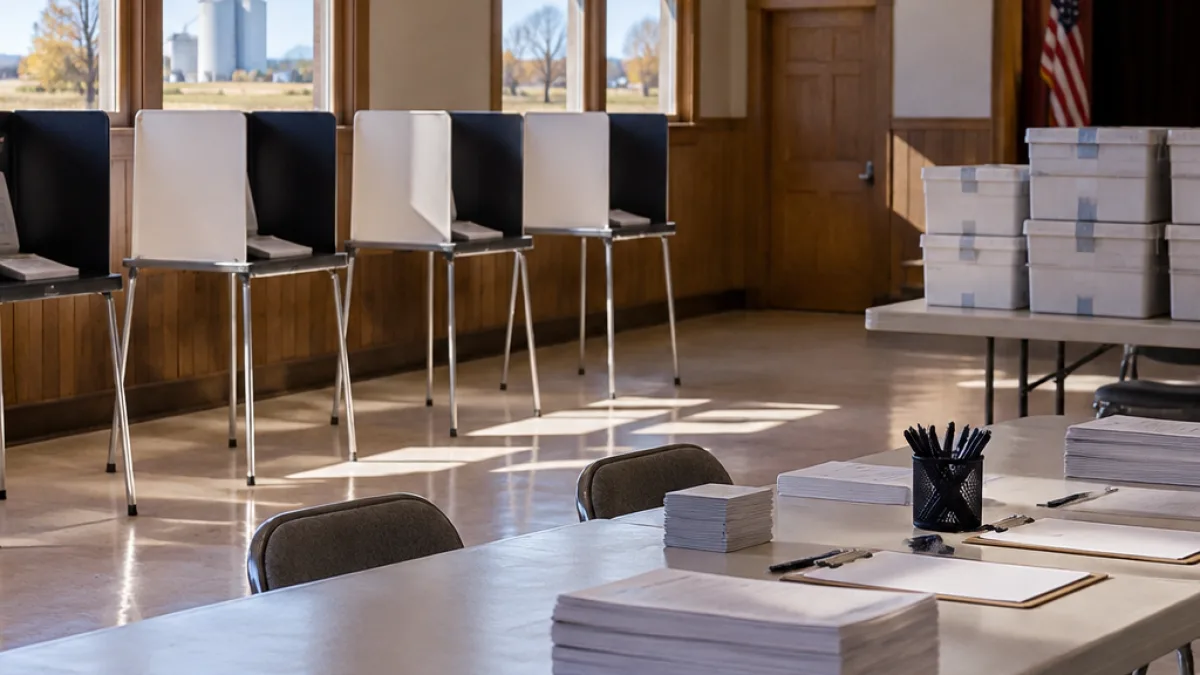
Nebraska’s system of drafting election workers helped counties fill polling-place jobs during the Nov. 3 general election, continuing a practice that treats Election Day service as a civic obligation rather than a strictly voluntary assignment.
Every registered voter who is at least 18 years old is eligible to be selected for election work. A voter who ignores a summons can face a criminal misdemeanor charge and a fine of up to $100.
“I learned about it when I received a summons in the mail.” — Darbi Eschmann
Eschmann worked at a northern Omaha precinct in the Elkhorn area during the election. It was her first time serving at the polls, and she had not volunteered for the assignment before receiving the notice.
How the draft works
Nebraska is the only state in the country that uses compulsory service for election workers, according to the account of the system. The approach gives county election officials a pool of registered voters beyond those who respond to public calls for volunteers.
- Eligible registered voters are selected and sent summonses to serve on Election Day.
- Failure to comply can result in a misdemeanor charge and a fine of up to $100.
- Polling places must include a main worker who is a Democrat and another who is a Republican.
State law also calls for other election workers to include members of recognized political parties and nonpartisan voters. Sarpy County Election Commissioner David Jones said the draft can help officials meet those representation requirements when the available volunteer pool does not include enough people from different affiliations.
“Sometimes, that’s hard to come by, so we can use the draft to help with that.” — Sarpy County Election Commissioner David Jones
A system dating to 1914
Nebraska lawmakers established the election-worker draft in 1914. A 1996 Federal Election Commission report said the system was created in response to corruption concerns in Omaha. At the time, powerful politicians controlled the county election office and its poll workers, and officials faced repeated accusations that ballots were being manufactured to manipulate election results.
The staffing model remains unusual as election offices around the country seek enough workers to operate polling places. Other jurisdictions commonly recruit through churches, civic organizations and businesses. Nebraska instead combines volunteer recruitment with compulsory selection from the voter rolls.
The practice has also drawn attention outside the state. California lawmakers passed legislation this year to create a similar draft system, but Gov. Gavin Newsom vetoed the measure. Nebraska’s arrangement remains in place for future elections, with county officials responsible for selecting and assigning workers under state requirements.