Construction is underway on the replacement of Tunnel No. 2 along the Goshen/Gering-Fort Laramie main irrigation canal, an infrastructure project intended to restore a key water-delivery route serving growers in western Nebraska and eastern Wyoming.
Work began Wednesday, Nov. 18, more than seven years after the original tunnel collapsed and breached, disrupting irrigation deliveries. The two irrigation districts involved in the project hosted a public launch and open house the previous day with Guy F. Atkinson Construction LLC, the contractor carrying out the replacement.
More than 100 people attended the Nov. 17 event, including members of Congress from Nebraska and Wyoming, state and local lawmakers, representatives of the U.S. Bureau of Reclamation and area growers. Presentations covered the purpose of the project and the specialized equipment that will excavate the old tunnel and install the new structure.
Continuous excavation and installation
The construction plan calls for work around the clock, seven days a week. Three crews will rotate through 20-day work periods followed by 10 days off to maintain continuous operations. The replacement is expected to be finished by mid-May 2027.
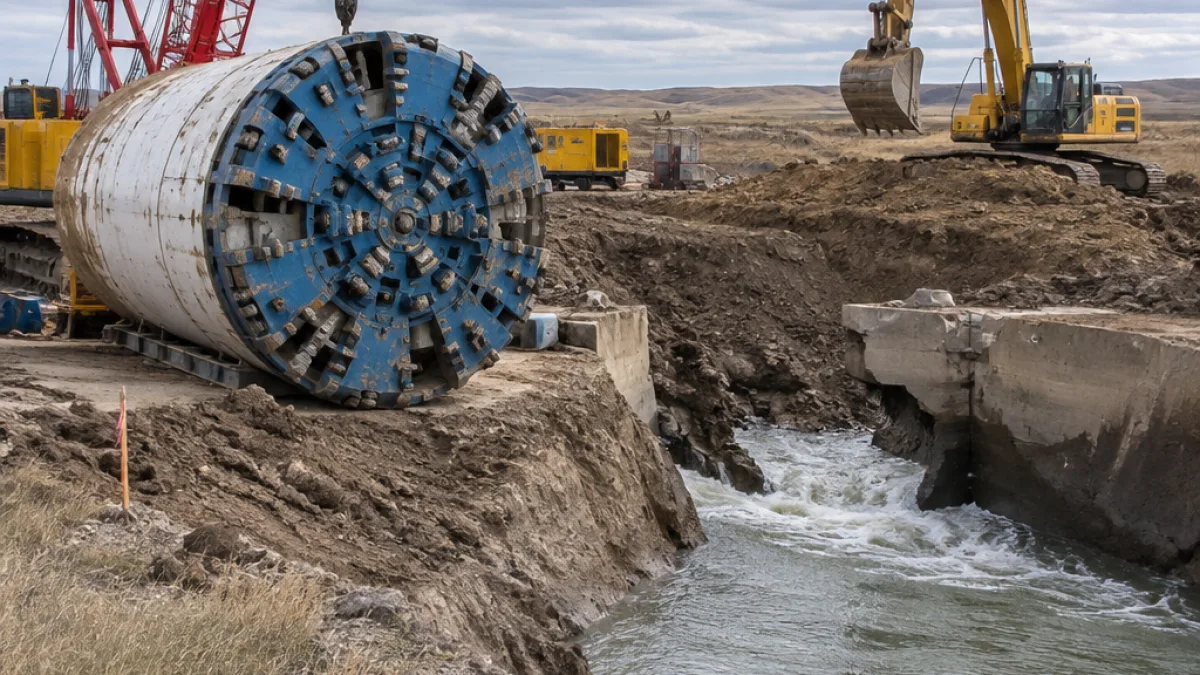
A custom digger shield will remove about five feet of the existing tunnel at a time. A Sandvik machine known as a “mucker” will collect the excavated material and move it through the tunnel entrance. Trucks will transport the material to a designated disposal site.
- New tunnel sections will be moved from the back of the shield to the front for installation.
- Each section will be assembled from six individual segments weighing between 6,000 and 9,500 pounds apiece.
- Workers will position and bolt the segments together before sealing the joints.
- Grout will be pumped around the outside of the new lining to fill the space between the tunnel and the surrounding ground.
The replacement sections will form the new lining as excavation advances. The project follows the collapse and breach that interrupted deliveries through the main canal and is being carried out with participation from the irrigation districts, the contractor, federal officials, lawmakers and local agricultural interests.