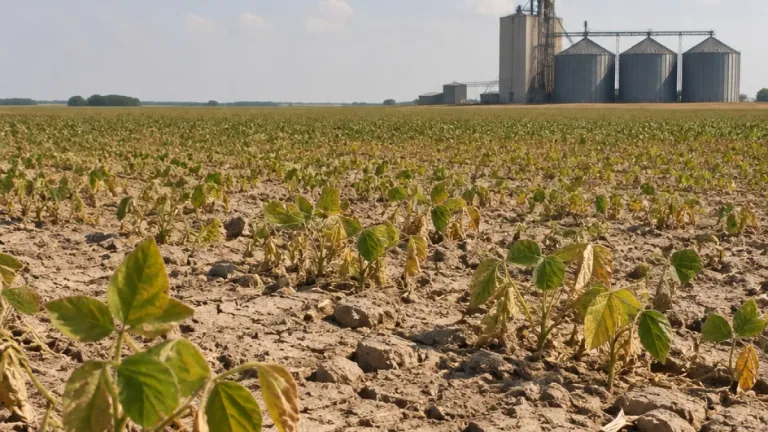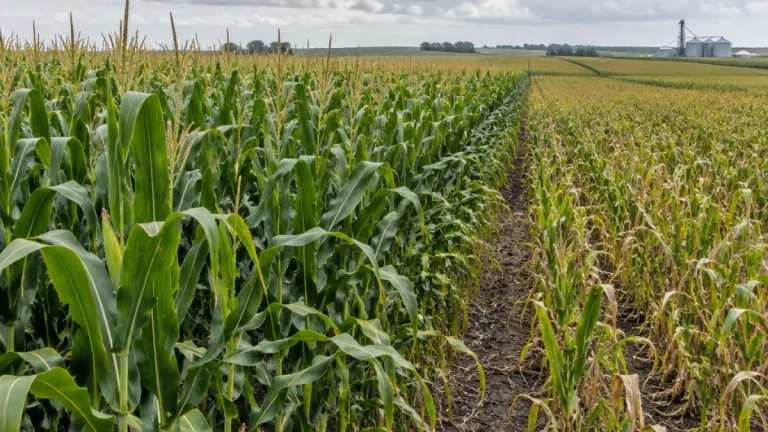
Drought-stressed annual forages can carry elevated nitrate levels, and Nebraska Extension is urging producers to test hay before using it in livestock rations. The risk applies to crops such as foxtail millet, oats, sudangrass and sorghum-sudan hybrids harvested for hay.
Aaron Berger, a Nebraska Extension livestock educator, said drought-related stress can affect the safety and feeding value of forage. Testing is needed to determine both nitrate concentration and basic nutritional characteristics, including moisture, protein and energy.
“These forages should be tested both for nitrates and quality, in order to plan for safe and cost-effective feeding.”
Berger said relying on figures from earlier years or general reference values can lead to a ration that does not match the hay being fed. Laboratory analysis gives producers information about the specific forage lot available for their cattle or other livestock.
Sampling must represent the hay lot
The first step is collecting a sample that reflects the entire lot rather than a single bale or a small portion of the harvest. Nebraska Extension defines a hay lot as forage gathered from the same field with similar plant types, cutting dates, maturity, varieties, weed contamination, harvest equipment, curing methods and storage conditions.
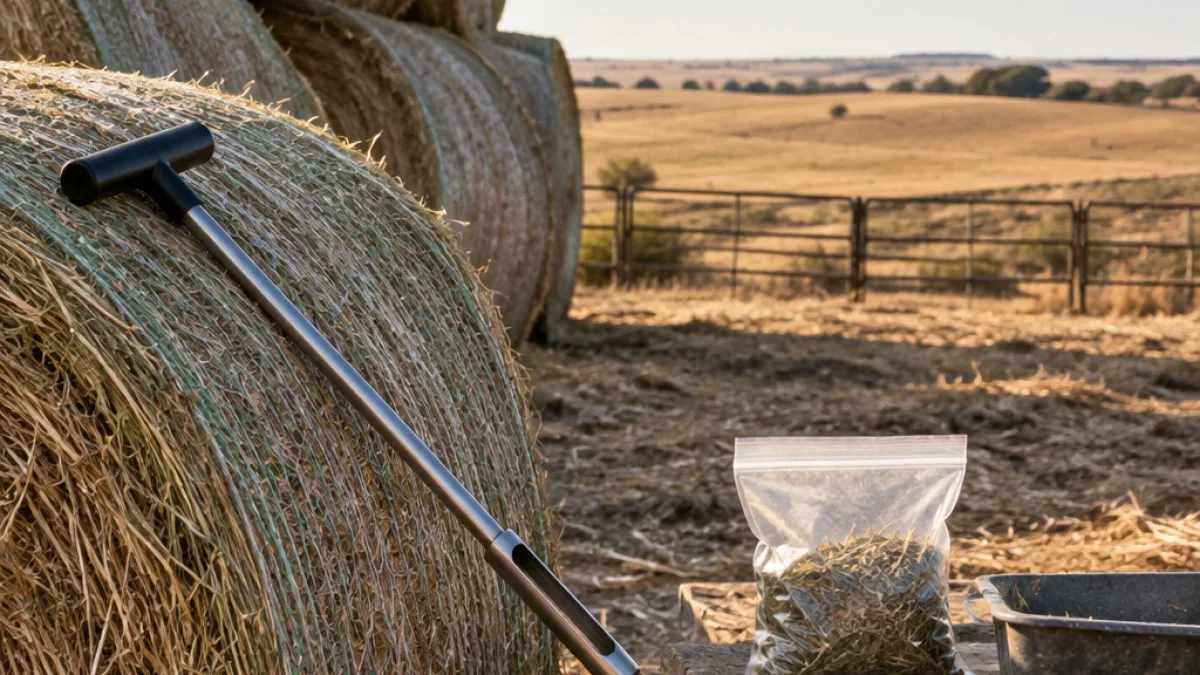
- Use a hay probe or core sampler that reaches 12 to 18 inches into the bale.
- The sampler should have an internal diameter of at least 3/8 inch.
- Collect material from 15 to 20 bales in each hay lot before submitting a sample for analysis.
- Keep collected material in a sealed plastic bag in a cool, dry location until it is submitted.
Extension guidance says producers should avoid overheating the probe, particularly when using a drill, because heat can damage the sample. The collected material can be combined or reduced for analysis when necessary, but the initial bales must represent the lot being evaluated.
Moisture affects sample storage
Samples containing more than 15% moisture should be frozen before testing, according to the guidance. Proper handling helps preserve the material between collection and analysis.
Nitrate testing is the only way to determine whether significant accumulation occurred in forage grown under stressful conditions. Nebraska Extension directs producers to its NebGuides on nitrate use in livestock feeding and feed sampling for additional instructions on collection and analysis. The guidance also emphasizes that testing hay for quality and nitrates gives producers information needed to plan feeding based on the forage actually stored for use.