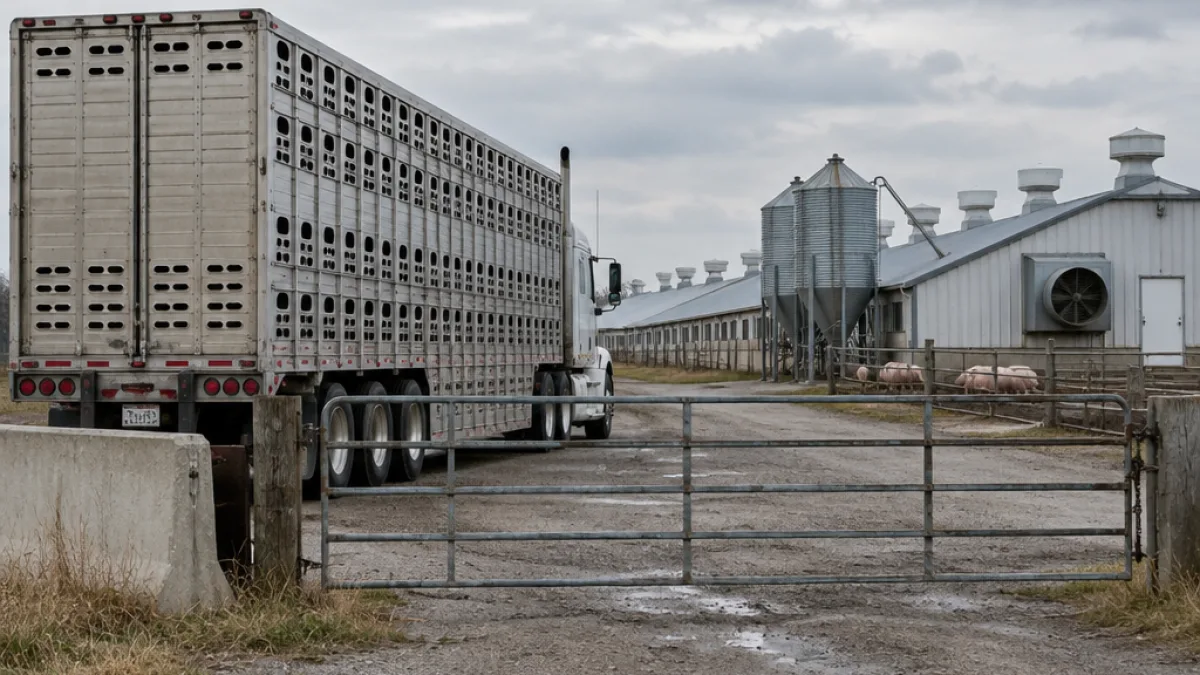
A disease-surveillance method developed by Lincoln-based animal health startup DARO detected porcine reproductive and respiratory syndrome virus in pigs that were scheduled to move from a Kansas gilt development site to other farms.
The routine oral-fluid test had returned a negative result, which would have allowed the shipment to proceed. Pipestone, the swine health and production company overseeing the movement, halted the transfer after DARO’s method produced a positive result. Additional testing then confirmed the infection.
“In a normal situation, they would have passed their testing to approve shipment. They were slated to ship that week on a Thursday. We would have infected multiple farms if we had not detected it with DARO on that Monday.” — Cameron Schmitt, executive vice president of Pipestone Veterinary Services
The pigs were expected to leave the site later that week. Stopping the shipment prevented the animals from moving to multiple farms while infected, according to Schmitt. The incident illustrates how different surveillance methods can produce different information from the same herd, particularly when a conventional test does not identify an infection.
A broader view of herd health
DARO founder Kristen Bernhard said the company was created to supplement diagnostic tools already used by veterinarians rather than replace them. The company’s approach grew from Bernhard’s background in human pathogen genomics, where population-level surveillance can provide information that individual testing may miss.
Bernhard said livestock continuously leave biological material in their surroundings. DARO’s work is based on using that material to help identify what is happening across a population of animals. The company’s stated focus is earlier and more complete surveillance of disease in livestock settings.
Porcine reproductive and respiratory syndrome virus is a concern for swine operations because infected animals can carry disease between farms when they are moved. In the Kansas case, the planned transfer was stopped before the pigs left the development site and further testing was performed.
How the testing unfolded
- The oral-fluid test returned a negative result.
- DARO’s surveillance method detected the virus before the scheduled shipment.
- Pipestone stopped the movement and ordered additional testing, which confirmed the infection.
The case is part of DARO’s effort to apply population-level surveillance principles to livestock production. For producers and animal-health personnel, the episode also shows the role of testing before animals move between farms, where an undetected infection could be carried into additional herds.