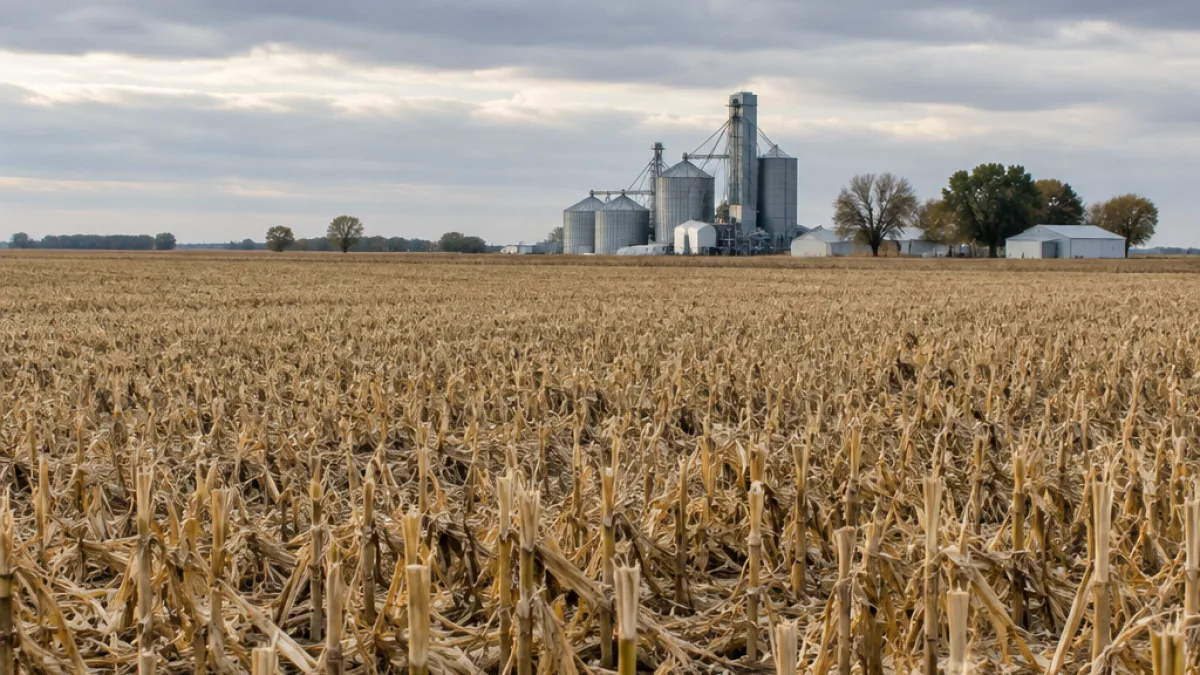
Nebraska’s nonirrigated cropland values declined during the third quarter while ranchland values increased across the Kansas City Federal Reserve’s agricultural district, according to a survey of farm lenders released Monday.
The Federal Reserve Bank of Kansas City said irrigated cropland values across the district rose 5% from a year earlier. Nonirrigated cropland values were unchanged across the district, but Nebraska was the only state to report a decline in that category during the quarter. Cash rents for both irrigated and nonirrigated land were unchanged from a year earlier after recovering from weakness earlier in 2026.
Land values and farm income
Ranchland values showed stronger gains. Values across the district rose by almost 10% from a year earlier, with increases of nearly 15% in Kansas, Missouri and the Mountain States. The survey said developments in farmland values were similar across most states in the region.
The district includes Nebraska, Kansas, Missouri, Oklahoma, Wyoming, Colorado and northern New Mexico. The survey is based on responses from agricultural bankers who report on land markets, lending activity and farm finances in their areas.
- Ranchland values: up almost 10% across the district from a year earlier.
- Irrigated cropland: up 5% across the district.
- Nonirrigated cropland in Nebraska: down during the third quarter.
- Cash rents: unchanged from a year earlier for both irrigated and nonirrigated land.
The Kansas City Fed said agricultural credit conditions remained tight, although the pace of deterioration slowed in the third quarter. Problem farm-loan rates held steady and remained modest for most lenders. The share of bankers reporting that more than 10% of their farm-loan portfolios were on a watch list fell slightly from about 30%.
“Higher crop prices likely mitigated the additional margin pressure for many farms.” — Federal Reserve Bank of Kansas City
Bankers reported that fuel prices rose as harvest approached, adding to producers’ costs. The Federal Reserve said higher crop prices and recent crop-insurance payments provided some support for farm finances. The payments were described as modest assistance rather than a broad resolution of lending pressures.
Farm profits remained narrow, and the Federal Reserve said risks of gradual deterioration in farm financial conditions were still elevated. The survey also said the share of lenders reporting severe stress in their farm-loan portfolios remained limited.
Regional lending conditions
The survey’s findings place Nebraska’s nonirrigated land market against a broader district pattern of rising ranchland values and stable or higher irrigated land values. For Nebraska producers and landowners, the quarter included a decline in nonirrigated cropland values even as crop prices and insurance payments helped relieve some pressure on operating margins.