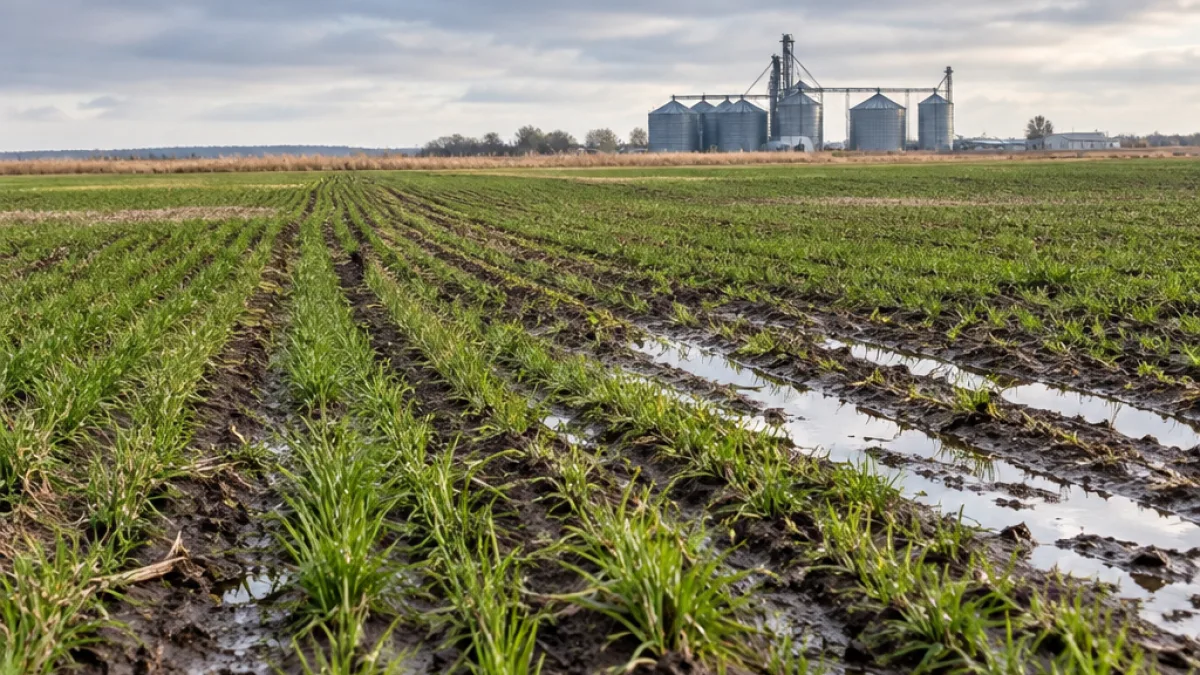
Nebraska’s hard red winter wheat crop entered the winter season with generally favorable moisture conditions but a condition rating below the recent average, according to the U.S. Department of Agriculture’s assessment as of Nov. 8.
| Measure | Nebraska | 2021-25 average |
|---|---|---|
| Winter wheat rated good to excellent | 67% | 89% |
| Topsoil moisture adequate to surplus | 81% | Not provided |
The condition figure placed Nebraska below its 89% 2021-25 average. The USDA also reported that 81% of Nebraska’s topsoil moisture was adequate to surplus, giving newly seeded wheat access to improved moisture supplies as plants emerge and develop ahead of winter.
Rain improved moisture, but timing varied
Across the hard red winter wheat region, crop conditions improved from the previous week in most major producing states. The broader assessment found that autumn rainfall helped establish fields in many areas, while heavy or poorly timed precipitation delayed planting and required some fields to be replanted.
The USDA rated the hard red winter wheat crop good to excellent at 51% in Kansas, 36% in Oklahoma, 42% in Texas, 44% in Colorado, 67% in Nebraska, 44% in South Dakota and 63% in Montana. The five-year comparisons were 53% in Kansas, 69% in Oklahoma, 63% in Texas, 87% in Colorado, 89% in Nebraska, 83% in South Dakota and 83% in Montana.
Topsoil moisture rated adequate to surplus was reported at 82% in Kansas, 61% in Oklahoma, 59% in Texas, 52% in Colorado, 81% in Nebraska, 60% in South Dakota and 63% in Montana.
“Getting the wheat crop out of the ground and getting a stand of wheat established before winter is half the battle.”
— Justin Gilpin, chief executive officer of Kansas Wheat
Gilpin said favorable fall conditions do not ensure strong yields. He also pointed to the importance of snow during the winter and spring rainfall after the crop resumes growth.
Planting delays remain in parts of the Plains
In Kansas, the harvest of corn and soybeans delayed some wheat planting, particularly where producers were planting a second crop. Excessive October rainfall also forced some producers to replant fields, slowing development even as the added moisture supported crop establishment.
Fall condition ratings provide an early measure of the crop’s status before winter dormancy. Newly seeded wheat still must emerge, develop tillers and maintain established stands before the spring growing season. The USDA’s Nov. 8 figures place Nebraska’s crop in that early evaluation period, with moisture supplies rated more favorably than the crop’s condition compared with its recent average.