People have traded or wagered more than $3.1 million on Nebraska’s U.S. Senate race and placed substantial sums on other statewide contests through prediction platforms that offer contracts on political outcomes, Nebraska Public Media reported. The activity comes even though Nebraska is one of only two states identified by Pew Research that could prosecute election betting as a felony.
How the markets work
Platforms such as Kalshi and Polymarket let users buy and sell contracts that pay off if a specified political event occurs, a mechanism the companies describe as trading on event outcomes rather than traditional gambling. Industrywide, users traded or wagered about $53 billion on Kalshi and Polymarket in July, the report said.
- More than $3.1 million has been traded on whether former Gov. Pete Ricketts or independent Dan Osborn will win Nebraska’s U.S. Senate race.
- At least $1.8 million has been wagered on the margin of victory.
- In 2024, at least $1.4 million was wagered on the presidential outcome in Nebraska’s 2nd Congressional District on the same platforms.
Legal and ethical questions
Many states prohibit wagering on elections; most treat violations as misdemeanors. Nebraska and Illinois stand out for laws that may raise the offense to a felony, according to Pew Research cited by Nebraska Public Media. Legal experts and advocates have expressed concern about betting tied to political contests. Some argue the markets provide useful public data on expectations, while others call them potentially harmful.
“I think they're one of the biggest issues that have popped up in the 2026 Midterm campaign,”
David Szakonyi, co-founder of the Anti‑Corruption Data Collective and an associate professor, was quoted describing the emergence of election trading as a major campaign season development.
Scope of wagering in Nebraska contests
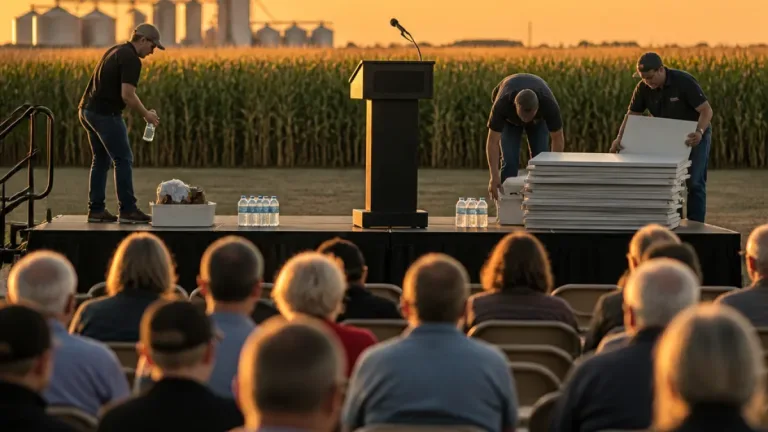
Beyond the Senate market, Nebraska-linked contracts have attracted wagers in races for governor and the 2nd Congressional District, each drawing more than $80,000 on these platforms, the report said. Market activity has also extended to smaller, unconventional propositions — for example, nearly $800,000 was wagered on prediction contracts tied to words or phrases President Donald Trump might say during a rally in Grand Island earlier this month.
State officials have not announced enforcement actions tied to these markets in Nebraska. The platforms maintain they operate as exchanges for event contracts rather than conventional sportsbooks. The volume of activity has renewed calls from some advocates and lawmakers to clarify or change state law addressing wagering on political outcomes.
The betting and trading figures reported are platform aggregates and do not identify individual bettors. The activity adds a new public-data dimension to attention on Nebraska contests as voters prepare for the Nov. 3 general election.